

The Human Edge | Keynotes & Workshops
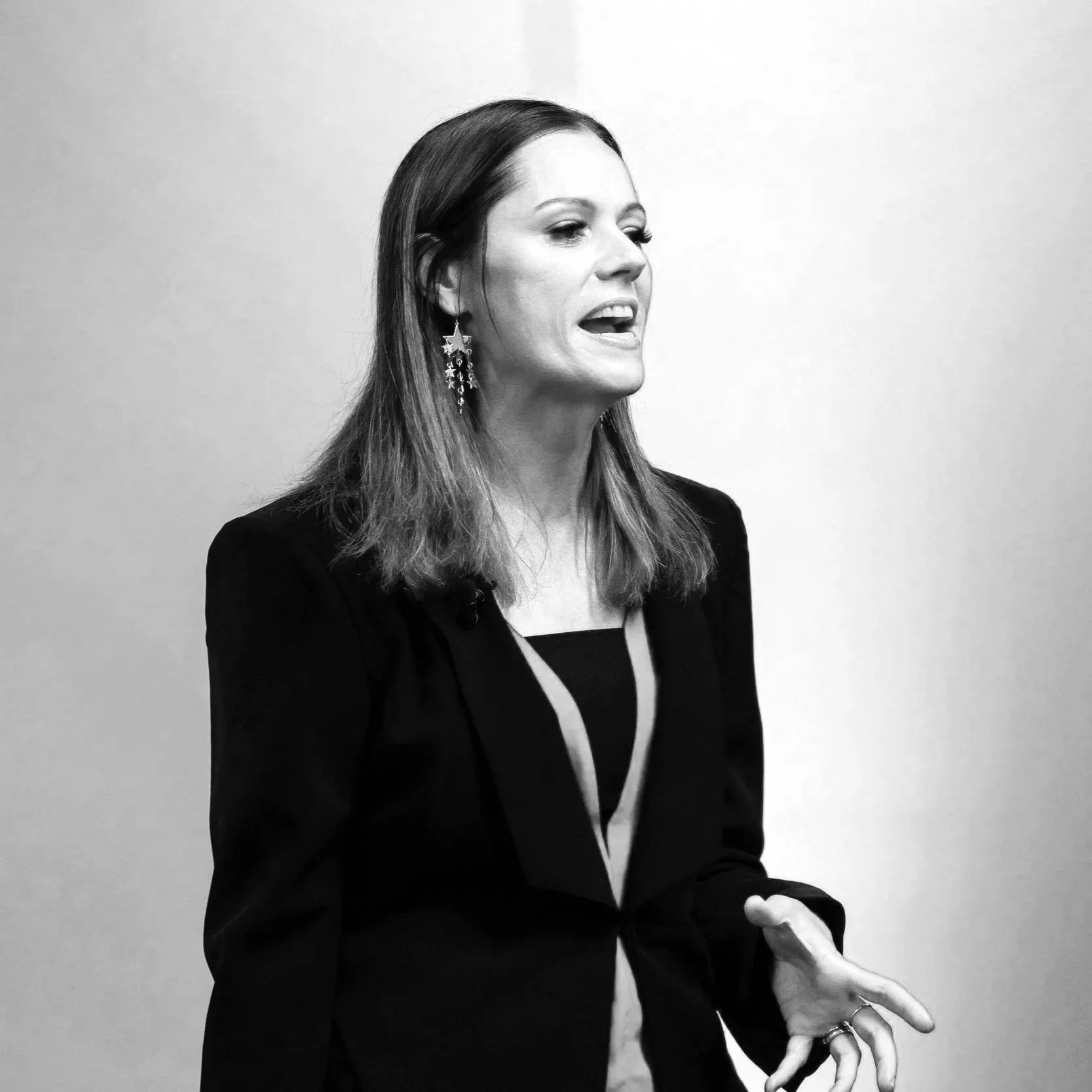
We are no longer approaching acceleration. We are inside it.
Artificial intelligence is changing how work gets done. Tasks that once took weeks now take minutes. Work that once required teams can now be initiated with a prompt. Execution is faster than ever.
But understanding has not kept pace.
Information is expanding. Options are multiplying. Pressure is intensifying. In this environment, speed no longer creates advantage. It is increasingly available to everyone.
What matters now is clarity. Judgement. Human agency.
AI is exceptional at optimisation. It generates options, surfaces patterns, and accelerates output. What it cannot do is determine what matters. As options multiply without corresponding clarity, decision quality weakens. Alignment fades. Teams stay busy but lose momentum.
This is where the Human Edge determines whether acceleration compounds or fragments performance.
The Human Edge is the set of human capabilities that allows leaders and teams to operate at pace without losing agency. It enables organisations to work with artificial intelligence, rather than be unconsciously directed by it.
In an environment where speed is everywhere, advantage belongs to those who can interpret change, align around what matters, and act with intent.
AI provides acceleration. The Human Edge provides direction.

The Seven Edges
1. The Instinctive Edge
Instinct is trained pattern recognition operating below conscious thought. It enables experienced judgement at speed, without deliberate analysis. When people wait for perfect data instead of using this capacity, decisions stall. Systems can inform judgement, but they cannot replace embodied experience.
2. The Creative Edge
When artificial intelligence can generate almost anything, creativity shifts from making to choosing. It is the human capacity to discern what matters, what works, and what is worth advancing, and to decide where machines add value and where human judgement must lead.
3. The Adaptive Edge
In an environment shaped by artificial intelligence, adaptation unfolds through a real-time relationship between human and machine intelligence. As intelligence becomes abundant, it challenges assumptions about what defines us. The adaptive edge is the capacity to remain conscious in that shift, letting old identities fall away while new ways of being take shape.
4. The Relational Edge
As intelligence becomes distributed across people and machines, no single mind holds the whole picture. The relational edge is the ability to hold shared judgement under pressure, integrating multiple perspectives and machine input without fragmenting. It determines whether distributed intelligence produces coordination or collapse.
5. The Integrity Edge
As artificial intelligence expands what is possible, the constraint shifts from capability to choice. AI will scale whatever incentives, assumptions, and values are present in the system. The integrity edge is the ability to decide what should be built, not just what can be built, and to ensure that progress strengthens rather than corrodes what matters.
6. The Presence Edge
As intelligence, inputs, and signals multiply, attention becomes the primary constraint. The presence edge is the capacity to hold attention steady in an environment built to fragment it. Without it, clarity thins and judgement drifts.
7. The Purpose Edge
As roles, skills, and tools continue to shift, meaning can fragment. The purpose edge is not a statement of intent, but a daily practice of orientation. It is how action stays directed when identity is in motion. Without it, effort continues, but commitment dissipates.
Delivery
The Human Edge is delivered in three formats. Each uses the same core framework. The difference is not what is covered, but how it is worked with.
Modular keynote
A high-impact session designed to establish shared language and orientation.
Typically introduces three Human Edges of your choosing and frames the challenge leaders are facing.
Half-day workshop
A facilitated session that introduces all seven Human Edges and creates space for collective discussion and sense-making. Designed to build shared understanding rather than deep application.
Full-day workshop
An immersive working session. All seven Human Edges are explored in depth, with time to apply them to live decisions, tensions, and priorities.
Each format is designed to support clarity under pressure. The distinction is depth of integration, not ambition.
Initial conversation
A short discussion to understand your context, challenges, and objectives.
Design the modules
We select the relevant Human Edges and agree on format, depth, and sequence.
Delivery
Sessions are delivered live, virtually, or in person, depending on need.
-
AI moves at machine speed, and the pressure to keep up pulls leaders away from their internal compass. As the pace rises, sensing gives way to reacting and speed replaces direction.
AI can move fast. Humans decide where fast should go.
-
AI can generate art, photography and anything we ask of it. What it cannot do is feel the journey that leads there. Creativity has never been about the final thing we make. It’s about how we make it. The connecting. The sensing. The meaning-making. The human experience that expands our thinking and reveals patterns no machine can touch.
AI can produce the picture. Humans feel the story.
-
AI speeds up change, and the pressure to keep up pushes people into reflex mode. They tighten. They rush. They react. But real adaptability begins with self-regulation, the ability to pause long enough to sense what’s needed and choose your next move instead of being swept into someone else’s tempo. When change becomes constant, adaptability becomes less about speed and more about staying steady in the moment you’re in.
You can’t control the pace, but you can control how you meet it.
-
AI is brilliant at transactions. It can pass information, assign tasks, move the workflow along. But relationships aren’t built in transactions. They’re built in the pauses, the conversations, the tiny moments where people feel seen. Transformation lives there. Trust lives there. And in a world where technology accelerates everything, it’s easy to forget that teams don’t thrive because the work moves fast. They thrive because the people stay connected.
AI can run the transaction. Only humans create the transformation.
-
AI can analyse anything. It can optimise, predict and recommend with stunning confidence. But the decisions that matter most aren’t mathematical. They have consequences that stretch far beyond efficiency. They affect people, culture, trust and the world we’re building next. That’s why integrity isn’t a compass. It’s a responsibility. A commitment to choose based on values, not velocity. In an AI-shaped world, the future is defined by the decisions humans are still brave enough to make.
AI can calculate the path. Only humans can answer for it.
-
AI never stops. It fills the day with information, possibilities and noise. The real risk isn’t missing something. It’s missing yourself. When attention fragments, so does presence, the way you listen, relate, decide and live. Presence is not about slowing down. It’s about returning to the moment you’re in, the person you are and the life you’re actually trying to lead. It’s how we stay human when the world keeps pulling us away from ourselves.
AI can take your attention. Only you can choose where you place it.
-
AI is reshaping work at a pace that’s hard to absorb. The real fear isn’t losing tasks. It’s losing your sense of place. When the ground shifts, people wonder if what they do still matters. Purpose isn’t a slogan. It’s the thread that helps you stay connected to who you are and what you bring, even as everything around you moves. It’s how meaning stays alive in the middle of change.
AI can change your job. Only you decide your value.
Keynote Theme & Takeaways

About Rebecca
Rebecca Maklad has spent more than two decades working at the intersection of future thinking and the global speaking industry. She is the creator of The Human Edge, a methodology and keynote exploring how leaders and teams sustain clarity, connection, and sound judgement as AI reshapes decision-making.
Across her career, Rebecca has worked closely with purpose-driven thought leaders, entrepreneurs, and organisations focused on solutions, progress, and social innovation across science, technology, media, and social impact. This experience has shaped a deep understanding of how meaningful ideas move into action, how decisions are made under pressure, and what allows progress to hold when the stakes are real.
Rebecca spent nearly a decade with Future Crunch as Director, later delivering keynotes as part of the organisation’s speaking work. During this time, she worked with global audiences and enterprises to translate rapid scientific and technological progress into grounded human insight, delivering keynotes and workshops for organisations including Nine Network, ANZ, Telstra, Australia Post, World Vision, and many more.
She is also the host of The DNA of Purpose podcast, ranked in the top five percent globally.
Rebecca brings clarity, imagination, and humanity to conversations about change, helping people navigate what is already unfolding rather than chasing what comes next.