
REBECCA MAKLAD
When AI Is Everywhere,
The Advantage
Is Human.
Spoken for






Where does value go next?
For generations, the deal was simple: learn more, know more, become more valuable.
For generations, machines transformed what our bodies could do, so human value moved further into our heads. Knowledge became the advantage. Now AI is transforming what our minds can do too.
When knowledge, analysis and output become abundant, value doesn't disappear. It moves.
That shift sits at the heart of both work and education: what do organisations need from their people, and what do young people need to develop as machines become more capable?
Judgement. Curiosity. Adaptability. Context. The ability to question, keep looking, change course and know what matters.
Because the future will not be shaped by technology alone, but by the humans deciding how to use it.
Signature Keynotes
Three keynotes rethinking human capability in the age of AI.
Built in collaboration with Future Crunch. Each links to its full outline.
About Rebecca
The future is changing fast. The real question is who we become within it.
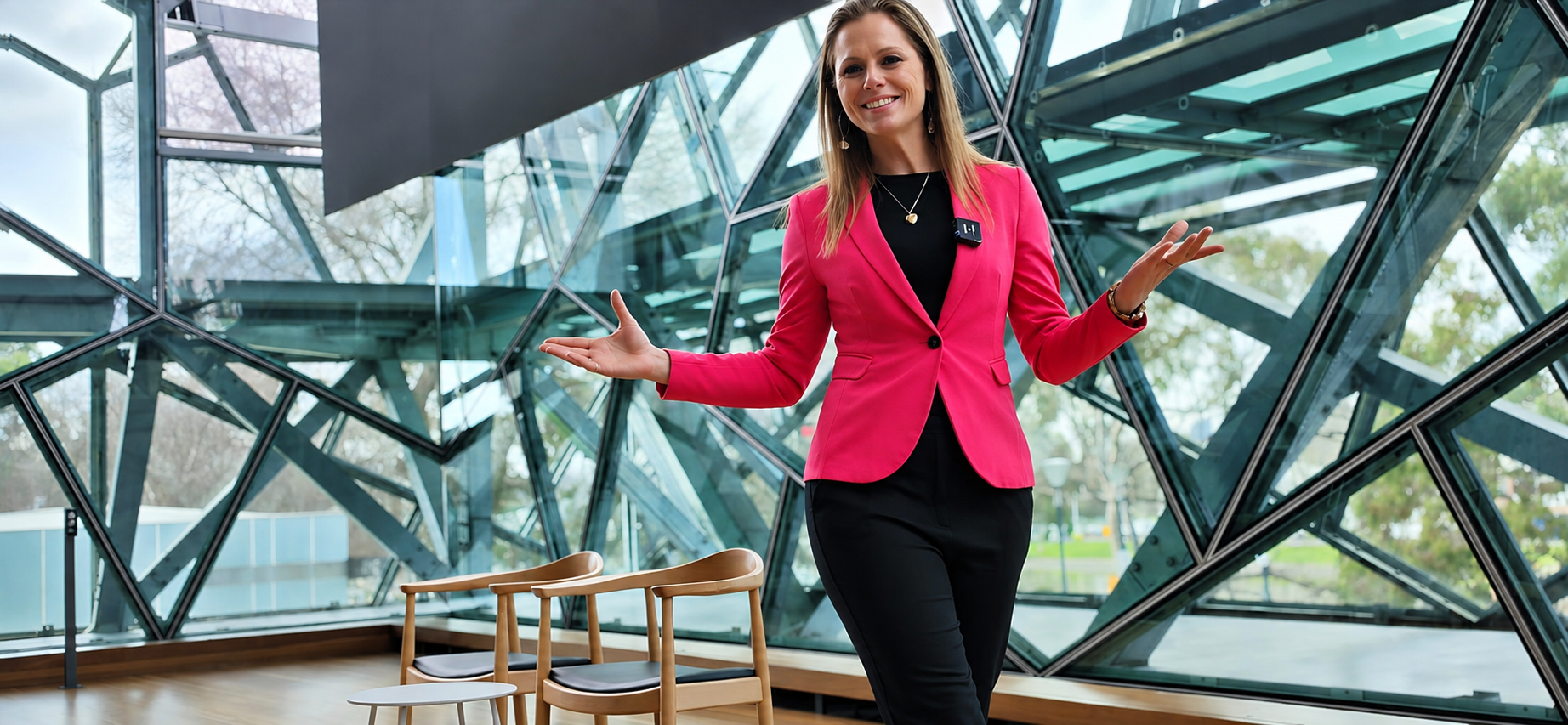
For more than two decades, Rebecca Maklad has worked alongside futurists, scientists, entrepreneurs, authors and thought leaders exploring the forces reshaping business, technology and society.
A long-standing member of Future Crunch, she previously served as CEO and Director and today continues as a Strategic Advisor, focused on what technological change means for leadership, work and human capability.
Rebecca has advised founders and experts on influence and authority, spoken for organisations including Telstra, Nine Entertainment, ANZ, EY, Australia Post, Smartsheet, World Vision and Cuscal, and hosted more than 125 conversations through The DNA of Purpose, her globally ranked podcast exploring purpose, leadership and human potential.
She is also Co-Founder of Humanity Schools, helping principals, educators and parents understand and develop the human capabilities young people will need to thrive in a rapidly changing world.
What audiences say
Compelling stage presence and a powerful brand of intelligent optimism, challenging conventional thinking throughout.
Alex Edney
Head of Culture and Diversity, World Vision
Preparing educators for the future, so they can prepare young people for it.
AI is making knowledge and technical capability more abundant. Academic achievement still matters, but it is no longer enough on its own.
Young people will also need the human capabilities that help them judge, adapt, create, connect, collaborate and act with agency.
Humanity Schools helps schools understand and develop those capabilities.
Through keynotes and workshops for principals, educators and parents, we translate the changing world into practical frameworks schools can use now.
We help educators strengthen human capability through what they already teach, without adding another subject or another layer of work.
Because preparing young people for the future is not only about what they know. It is about who they are becoming.
Stripe verification: V69RiX